
What Is Cistanche And What Is Cistanche Used For
Mar 07, 2023
Cistanche is a genus of parasitic plants that belong to the Orobanchaceae family. The genus includes various species that are used in traditional medicine to treat a variety of ailments. While there are several species of Cistanche, Cistanche deserticola is the most commonly used species in traditional Chinese medicine. This paper will explore the various varieties of Cistanche, their geographic distribution, special environmental requirements, differences, and effects as documented in ancient literature.

Click to check what is cistanche used for
Varieties of Cistanche
There are several species of Cistanche, but the most common ones are Cistanche deserticola, Cistanche tubulosa, and Cistanche salsa. Cistanche deserticola is found in Inner Mongolia, Xinjiang, Gansu, and Qinghai in China. Cistanche tubulosa is commonly found in the Tibet Autonomous Region, while Cistanche salsa is found in the western regions of China, such as Xinjiang.
Geographic distribution
Cistanche is primarily found in arid and semi-arid regions. Cistanche deserticola is found in the Maowusu desert, the Inner Mongolia plateau, and adjacent regions in China. Cistanche tubulosa is found in the dry regions of Tibet, while Cistanche salsa is found in the Gurbantunggut desert and Xinjiang Uygur Autonomous Region. In these regions, Cistanche is parasitic on the roots of certain plants, such as Haloxylon ammodendron, Tamarix spp., and Reaumuria soongorica.

Special environmental requirements
Cistanche thrives in areas with specific environmental conditions. For instance, Cistanche deserticola grows in areas with altitudes ranging from 300 to 1,500 m, a sand-covered field with low moisture and poor soil, and a high-temperature environment. Cistanche tubulosa grows in areas with an altitude of 2,000–5,000 m, a cold and dry climate, and is typically found on sloping sand dunes. Cistanche salsa grows in areas with an altitude range of 300 to 2,500 m, a sandy desert or arid-grass zone with a temperature range of 10-27 degrees Celsius.
Differences in varieties
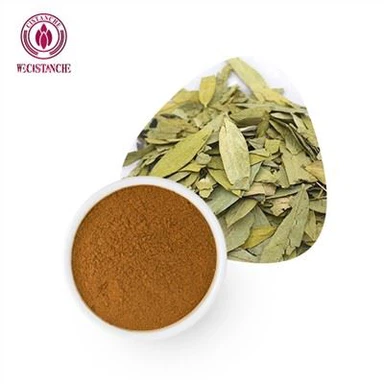
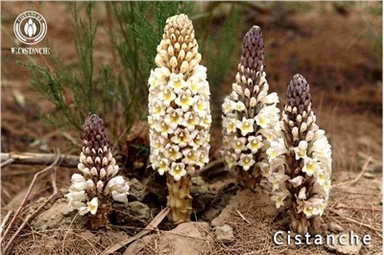
The different varieties of Cistanche differ in appearance, chemical composition, and traditional uses. Cistanche deserticola is typically yellowish in color, while Cistanche tubulosa is brownish-red or yellowish-brown. Contrastingly, Cistanche salsa is grayish-brown or purplish-brown. The specific chemical composition of each species differs even though they all contain various phenylethanoid glycosides. They all have different medicinal properties and have been traditionally used to treat specific illnesses.
Ancient documents on Cistanche
Cistanche has been used in traditional Chinese medicine for centuries. Traditional Chinese texts, such as "Shen Nong’s Herbal Classic" describe the uses of Cistanche in treating impotence, infertility, constipation, and low back pain. Additionally, "Compendium of Materia Medica" and "Ben Cao Gang Mu" mentioned various properties of Cistanche, such as immunomodulatory effects, anti-fatigue effects, anti-inflammatory effects, and anti-aging effects.

Effects of Cistanche
Cistanche is known for its numerous health benefits. According to traditional Chinese medicine, Cistanche tonify the kidney and improves sexual function. Additionally, Cistanche has been observed to have anti-inflammatory properties and is used to treat asthma and arthritis. Research has shown that Cistanche has neuroprotective, anti-cancer, and anti-aging properties. Several studies have also shown that Cistanche has anti-fatigue and anti-anxiety properties.
Conclusion
The various species of Cistanche have been used for centuries as a traditional medicine to treat various ailments. Cistanche deserticola, Cistanche tubulosa, and Cistanche salsa are the most commonly used species, each with different medicinal properties. Their geographic distribution is unique, and they thrive in specific environmental conditions. Ancient literature records the use of Cistanche in traditional medicine, with specific mention of Cistanche deserticola. Further research on these species will be instrumental in understanding the phytochemical profiles of these plants, and their future application in the pharmaceutical industry.

References:
1. Ma Z., Fan Y., Lu Y. (2018). Phytochemistry, pharmacology, quality control and future research on Cistanche species: A mini-review. China Journal of Chinese Materia Medica, vol. 43, no. 11, pp. 2162-2170.
2. Xie Z., Li J., Li Y. (2018). A Review on Phytochemistry and Pharmacological Activities of Cistanche tubulosa. Evidence-Based Complementary and Alternative Medicine, vol. 201